
Linen curtains in a Hyderabad home
Aakriti Nagpal · 29 August 2026 · 6 min read
How linen behaves in Hyderabad — the afternoon sun, the monsoon, and the dust. What to line, what to blend, and where pure linen is worth it.
Linen is the cloth people ask for when they want a room to feel finished without feeling formal. It has a slub, a matte face, and a drape that moves.
In Hyderabad it also has three enemies: the afternoon sun, the monsoon, and the dust that settles in every fold. We still specify it — lined, blended, or left bare depending on the window — because the cloth is worth using when it is cut for this climate rather than copied out of a European lookbook.
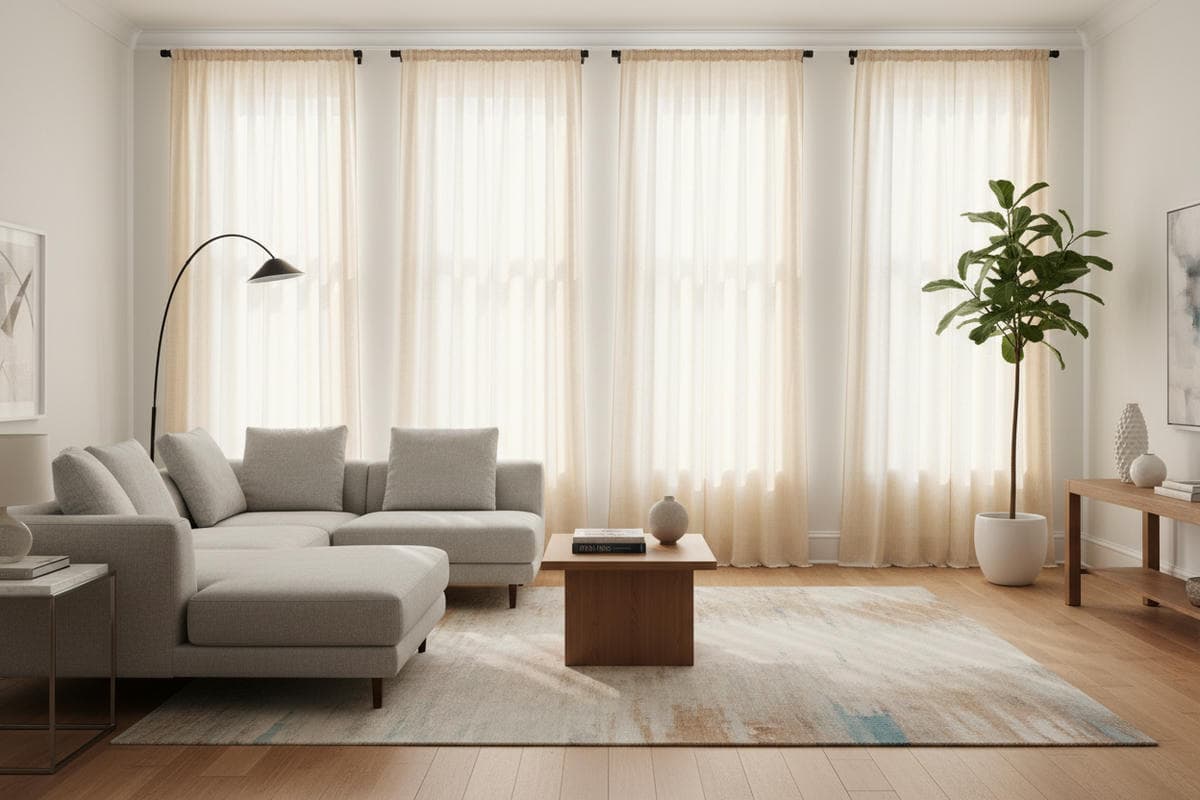
Pure linen, or a blend
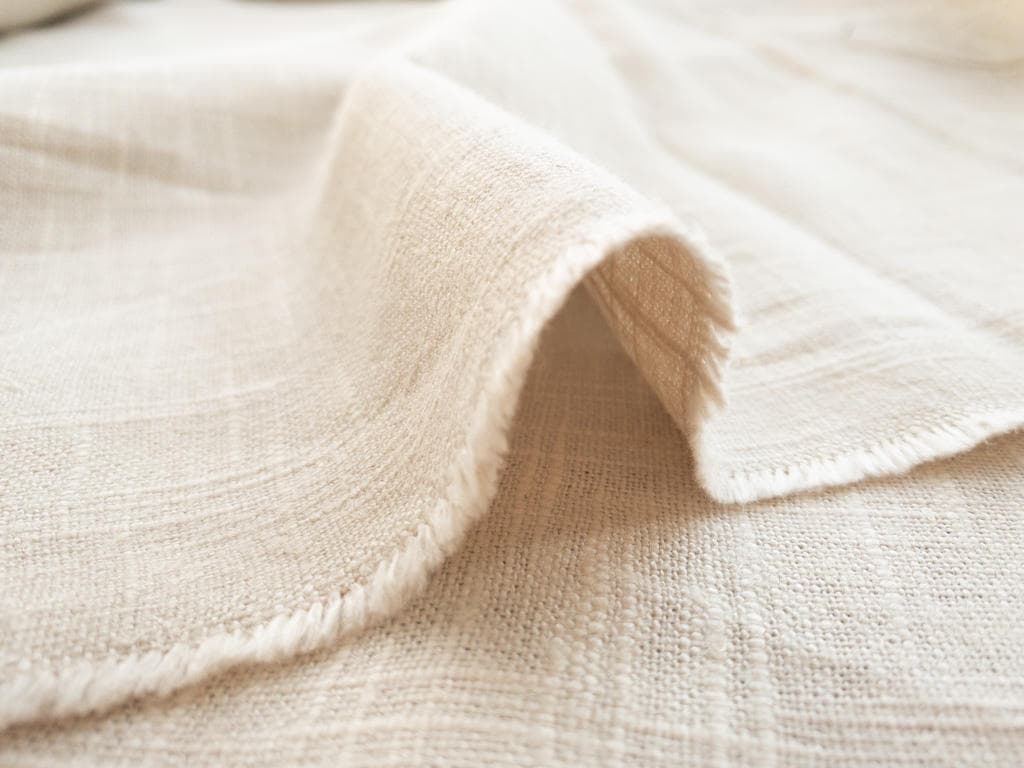
Pure linen has the slub and the slightly imperfect hang that people mean when they say linen. It also wrinkles, and the wrinkles are part of the look.
A linen blend — linen with cotton, viscose, or a small polyester content — holds a cleaner line and often sits better on a wave track. For a busy household, or a window that is opened twice a day, the blend is usually the more honest choice.
Feel both. Weight matters more than the label, and the label is the only part of this a website can show you.
What Hyderabad does to linen
Everything above is true of linen anywhere. Three things about this city change how it behaves, and they are the reason the same fabric can look right in one flat and tired in another within a year.
The afternoon sun is the one that matters. Linen is a natural fibre and natural fibres lose colour in strong ultraviolet faster than synthetics do. On a west or south-west window taking the full afternoon, an unlined pure linen panel will fade, and it fades unevenly — the leading edge and the folds that sit forward go first, so the panel ends up two shades. This is not an argument against linen on those windows. It is an argument for lining them. A lining takes the ultraviolet, costs a fraction of the face fabric, and is the part you replace in five years instead of the whole curtain.
If your living room faces west, the layering question is worth reading properly — what it takes to live with the afternoon covers the whole system rather than just the fabric.
The monsoon relaxes it. Linen takes up moisture from the air, and a panel hemmed in a dry April can sit a little longer in August. On a floor-length curtain that is the difference between clearing the floor and brushing it. It moves back as the air dries. Two things follow: hem to just clear the floor rather than to kiss it, and do not judge a drop in the first week of a wet spell.
The dust is real and the weave holds it. Anywhere near active construction — and in this city that is most places, for a while — an open linen weave catches more than a flat synthetic does. It vacuums out with an upholstery head and it does not stain, but it is worth knowing before you choose an open weave for a road-facing window rather than a garden-facing one.
Light, privacy, and the lining question
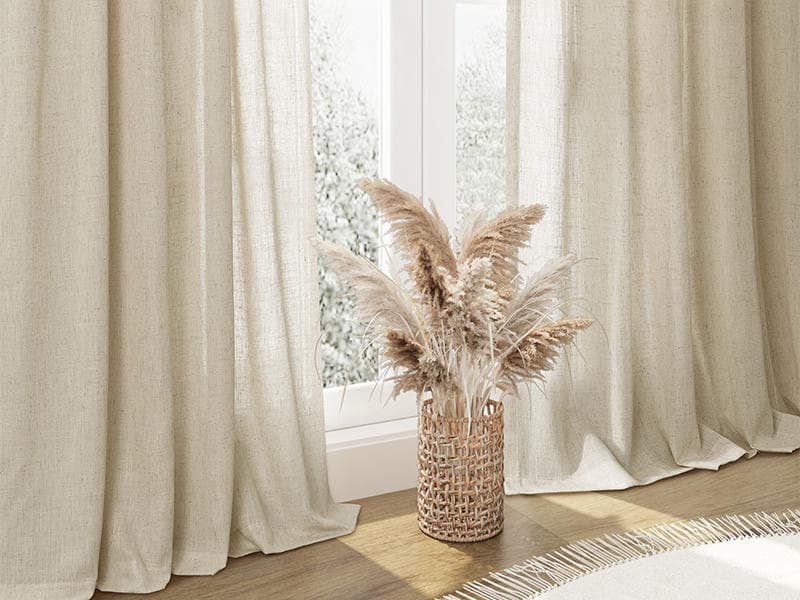
The lining decides what the curtain actually does. The face cloth decides what the room looks like. In that order:
- Unlined, or lightly lined — living rooms that want the glow, and rooms that do not face other windows at close range.
- Cotton lining — body, a better hang, and some protection from the sun eating the colour.
- Dimout lining — most of the light gone, the linen face still visible from inside.
- Blackout lining — sleep or media. The room goes dark and the face can still be linen.
- Linen over a Roman or a roller — the blind does the light control, the linen does the room. Often the right answer where there is no wall to stack fabric on.
Unlined linen in a bedroom is a morning cloth, not a sleeping one. Line it, or put a blackout blind behind it — the edges are where a blackout job is won or lost, not the cloth.
Colour, in this light
Ivory and white look fresh and show dust first. Flax, oatmeal, sand and warm taupe hide more, and they sit well with the teak, oak, stone and warm walls most flats here actually have.
Cool grey linen next to a warm floor often looks slightly wrong, and it is hard to see why in a photograph. Test it in the room, in the light the room gets.
Specifying the panels
- Measure the full width and allow fullness. Linen looks poor stretched flat across the glass — flatter than most cloths, because the weave is what you are meant to see.
- Hang high and finish at the floor.
- Choose the heading for the room — back-tab or wave for a soft fold, pinch pleat when you want structure. More on how that decision is made.
- Decide the lining before you fall in love with a colour. The same flax reads differently with blackout behind it.
Care is simple enough. Vacuum with an upholstery head, steam rather than press, and follow the care label on lined panels — some are dry-clean only because of the lining, not because of the linen.
Where pure linen earns it, and where a blend is the better buy
Taking those three together, the split is fairly practical here.
- Pure linen on north and east windows, and on any window in a room you are not fighting the sun in. It is where the texture and the drape are worth having and where nothing is working against them.
- A linen blend on the hard-working windows — the west face, the road side, the doors that get opened forty times a day. A blend creases less, holds its shape, and stands up to being handled.
- Lined, either way, on the afternoon face. It is the single change that most affects how long a linen curtain looks new in Hyderabad.
We keep linen and linen blends in the Banjara Hills showroom — House No 536, first floor, Road No. 12, NBT Nagar, opposite the Triumph showroom, Monday to Saturday, 11am to 8.30pm. Come and handle both in daylight before deciding. Linen is one of the fabrics a screen is worst at: the weave, the weight and the way it falls are the whole point, and none of the three survives a photograph.
Still stuck? Send a photograph of the window on WhatsApp and we’ll tell you what will and won’t work. Or read more about curtains.
This is the point where a measurement usually matters more than a preference. If you’d like us to look at it properly, start here.
Send a photo of the window — it usually tells us more than a description.
Read next
- West-facing living room curtains in Hyderabad heat
Exact measurement guide and layering system that actually blocks afternoon sun in west-facing living rooms. Practical advice for Hyderabad homes.
- Open-plan living & dining window treatments
Curtains and blinds that separate a living and dining area gently, light each zone differently, and still let the space read as one room.
- Curtain fabrics in Hyderabad
What the cloth is made of, when blackout earns its cost, how 3.0 fullness is calculated, and which heading belongs on which Hyderabad window.
NBT Nagar, Banjara Hills, Hyderabad 500034+91 96769 21216