
Small apartment living room curtains & blinds
Aakriti Nagpal · 17 August 2026 · 6 min read
Track calculations and low stack-back for living rooms under 12×14 ft, so an open curtain stops eating the wall the room cannot spare.
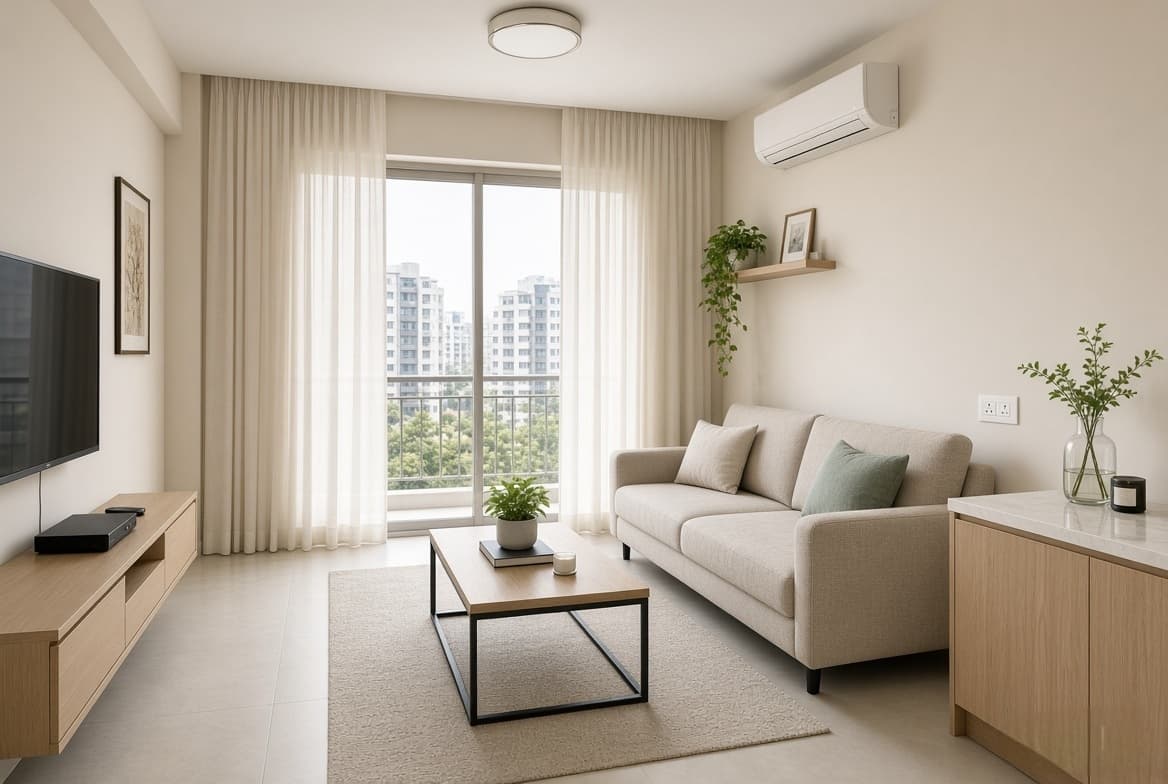
In most Hyderabad apartments the living room is the smallest public space in the house — frequently under 12×14 ft, and sometimes even tighter. Every centimetre of floor space and wall space matters.
Common problems we see include curtains that stack too deeply and block part of the window or eat into the seating area, tracks that are mounted too wide and make the room feel even smaller, heavy fabrics that visually weigh down the space, and poor light control that either makes the room gloomy or creates harsh glare in a compact area.
The goal is to achieve proper light control and privacy while making the room feel as open and large as possible.
Core Principles for Small Spaces
- Minimise stack-back — the amount of space the curtains occupy when fully open.
- Maximise the sense of height — draw the eye upward.
- Keep visual weight light — avoid heavy, dark, or overly patterned fabrics unless used very carefully.
- Choose the right operating system — some systems simply use less space than others.
Measurement Rules Specific to Small Rooms
Width calculation
Measure the window opening including frame. Two different numbers matter here, and confusing them is where small-room jobs go wrong:
- Track extension — how far the track runs past the opening on each side.
- Stack-back — the space the gathered curtain actually takes up when it is open.
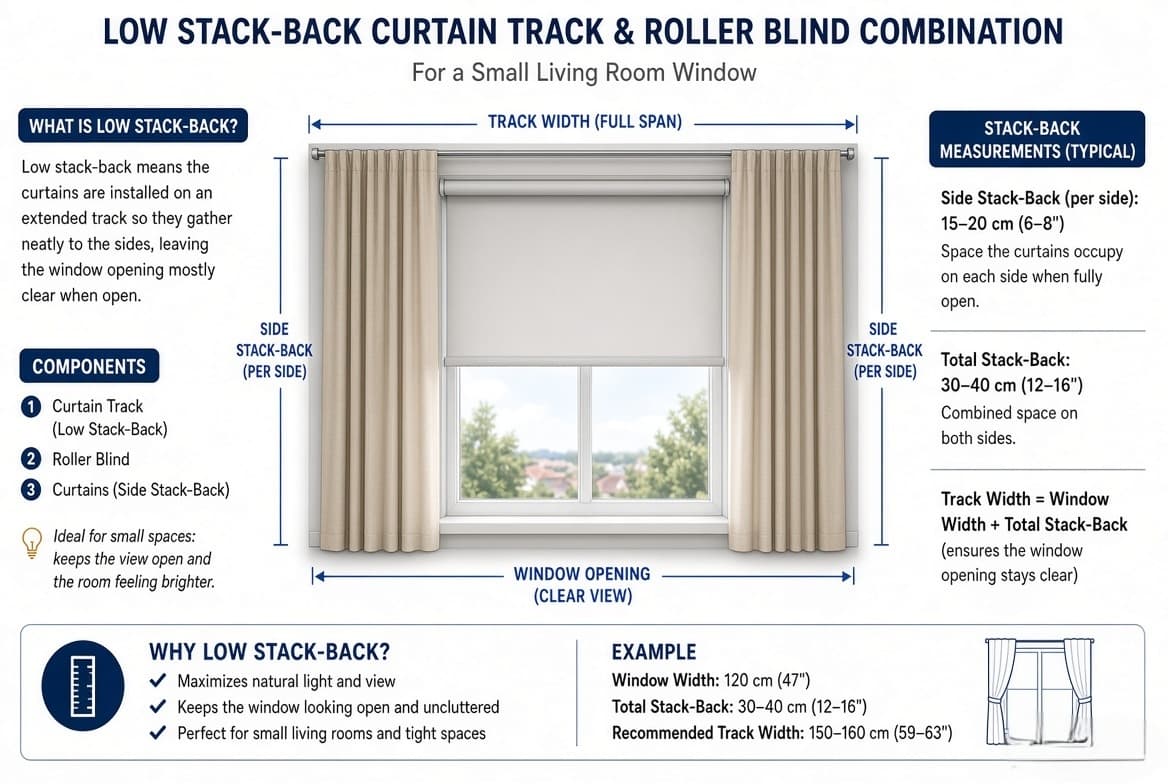
In a small room, extend the track only 5–10 cm (2–4 in) each side unless privacy from the side is critical. That is deliberately less than the curtain’s own stack-back, which means the open curtain will sit over a little of the glass. In a tight room that is the right trade — the alternative is pushing the curtains into the furniture zone.
If you want the glass completely clear and a tight track, that is what a low stack-back system is for. See the hardware section below.
Height
Always prefer ceiling mounting if the structure allows. This single decision makes the biggest visual difference in small rooms. Finished length should kiss the floor or have a maximum 1–2 cm (under an inch) clearance. Avoid puddling completely — it eats visual space and collects dust.
Track projection (depth from wall)
Keep it as tight as practical. A double track with 10–12 cm (4–5 in) total projection is usually sufficient and looks cleaner than a deep triple-track system.
Best Product Combinations for Small Living Rooms
Option 1: Roller Blind + Lightweight Curtains (Highly Recommended)
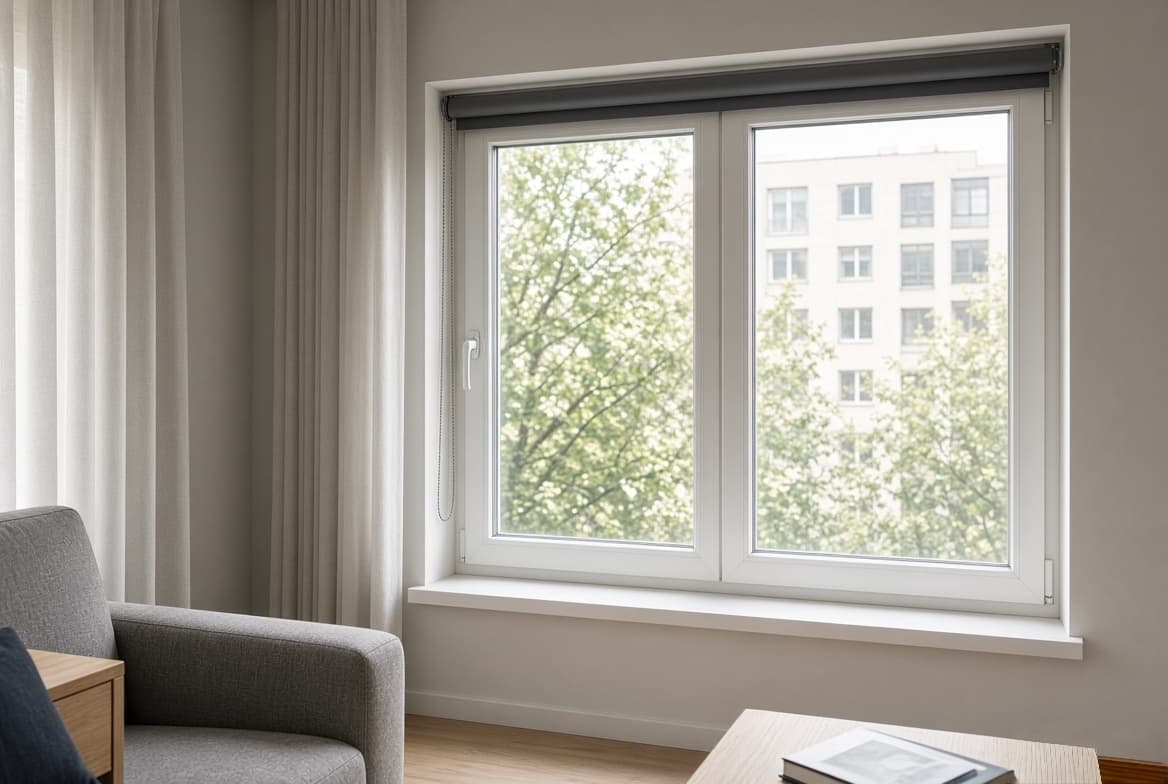
A sleek roller blind (preferably cassette style) closest to the glass handles most of the light and privacy control. A single lightweight decorative curtain on a slim track provides softness and style. When the curtain is open it stacks into a very narrow space. The roller blind almost disappears.
Option 2: Wave or Ripplefold Curtains
These systems use less fabric than traditional pinch-pleat or eyelet curtains and stack much more neatly. Ideal when you want a soft curtain look without the bulk.
Option 3: Roman Blind Only (for very tight spaces)
A well-made Roman blind can provide both style and function while using almost zero side stack space. Best when the window is not too wide and the client is comfortable with a more tailored look.
Option 4: Sheer + Minimal Blackout Curtain
Use a high-quality sheer for daytime and a single, relatively light blackout curtain for night and strong sun. Choose a fabric with good drape but low bulk.
Track and Hardware Calculations
For a typical 2.4–2.7 metre wide window in a small living room:
- Single curtain track: stack-back is roughly 15–20% of the track width on each side if using conventional pleats.
- Wave / ripplefold track: stack-back can be reduced to about 10–12% of track width.
- Roller blind: stack-back is essentially zero on the sides (only the cassette height at the top).
On a small 120 cm (4 ft) window, a low stack-back system works out at roughly 15–20 cm (6–8 in) per side — 30–40 cm (12–16 in) in total — which puts the track at 150–160 cm (about 5 ft). That is the arrangement in the diagram below, and it is how you keep the whole opening clear without the curtains reaching into the room.
Always calculate the open position against the actual furniture layout. Sit on the sofa (or mark the sofa position) and check whether the open curtains will interfere with the armrests or side tables.
Visual Tricks That Make the Room Feel Larger
- Mount the track higher than the window (ideally at the ceiling). This is the single most effective optical trick.
- Extend the track slightly beyond the window only if the extra width does not push into a doorway or furniture.
- Use lighter colours on both sheers and main curtains. Dark, heavy curtains in a small room make the walls feel closer.
- Keep the curtain colour close to the wall colour if you want the window treatment to “disappear” when open.
- Avoid heavy pelmets or elaborate valances — they lower the perceived ceiling height.
Practical Considerations for Hyderabad Apartments
Many small apartments have false ceilings. Confirm load-bearing capacity before specifying heavy tracks or motorisation. Dust accumulation is more noticeable in compact spaces — choose fabrics and tracks that are easy to clean. If the living room also serves as a work-from-home zone, prioritise glare control on the desk area without darkening the whole room.
Common Mistakes in Small Living Rooms
- Ordering full, luxurious fullness (2.5x or more) — it looks rich but creates excessive bulk when open.
- Using the same wide-stack specification that works in a large villa living room.
- Choosing long puddles “for a luxurious look” — they make the floor area feel smaller and are impractical.
- Installing thick, multi-layer systems that project too far into the room.
Final Recommendation
In living rooms under 12×14 ft, restraint and precision outperform richness. A well-measured, low-stack system with ceiling mounting and thoughtfully chosen fabrics will make the room feel larger, brighter, and more intentional.
The difference between a small living room that feels cramped and one that feels carefully designed often comes down to how little space the window treatment consumes when open, and how high it is mounted.
For exact track lengths, fabric quantities, and the best system for your specific furniture layout, a professional measurement visit is the most reliable way to avoid costly mistakes.
Still stuck? Send a photograph of the window on WhatsApp and we’ll tell you what will and won’t work. Or read more about curtains.
This is the point where a measurement usually matters more than a preference. If you’d like us to look at it properly, start here.
Send a photo of the window — it usually tells us more than a description.
Read next
- Open-plan living & dining window treatments
Curtains and blinds that separate a living and dining area gently, light each zone differently, and still let the space read as one room.
- Your curtain track is showing. Here are the two fixes.
No pelmet and a bare white track above the window? There are two ways out, and one very common mistake.
- Living room curtains in Hyderabad
Ceiling height, balcony sliders and the afternoon sun decide a living room curtain here, long before the cloth does — and four rooms we get asked about most.
- Made-to-measure curtains in Hyderabad
Ready-made drops are cut for shorter rooms. Why ceiling height, builder variation and fullness usually decide this here, long before taste does.
- Types of blinds for a Hyderabad home
Roller, Roman, zebra, Venetian and cellular — when a curtain is the wrong idea, and how to mount a blind so the light does not leak at the edges.
NBT Nagar, Banjara Hills, Hyderabad 500034+91 96769 21216